 NATARAJA
Board-level briefs on AI governance & accountability
Three continuing series, one framework. Each series governs a different force of the autonomous enterprise, and every brief argues one or more of the 5 Laws of Sovereign Decision Making, mapped live in this 3D ontology.
- Autonomy → Authority. Who may decide, and within what limits.
- Intelligence → Influence. How AI shapes a decision before approval.
- Governance → Guarantees. What must hold for the organisation to endure.
How to explore
Click a law to isolate its briefs
Hover a node to trace its links
Click a brief to open it
Drag to rotate · scroll to zoom
Legend
Executive Authority Brief
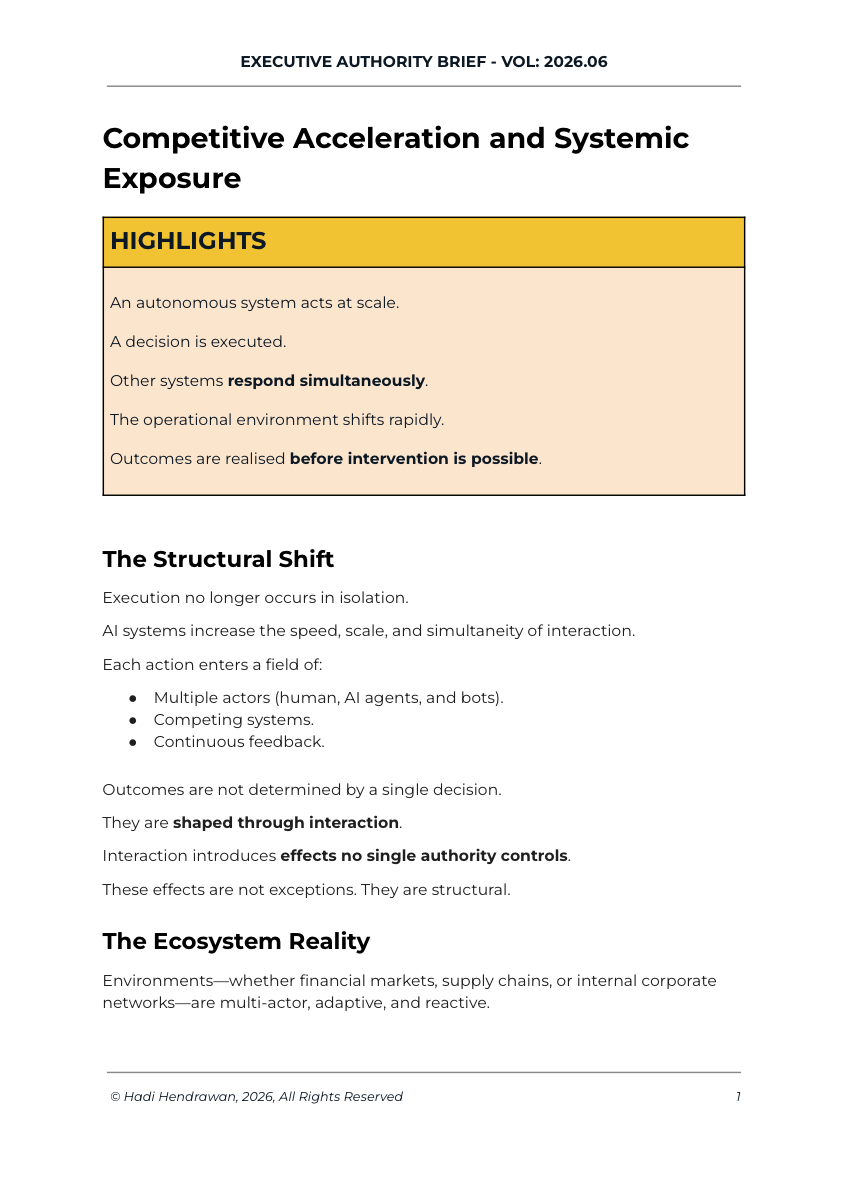
Competitive Acceleration and Systemic Exposure
An autonomous system acts at scale.
Read brief →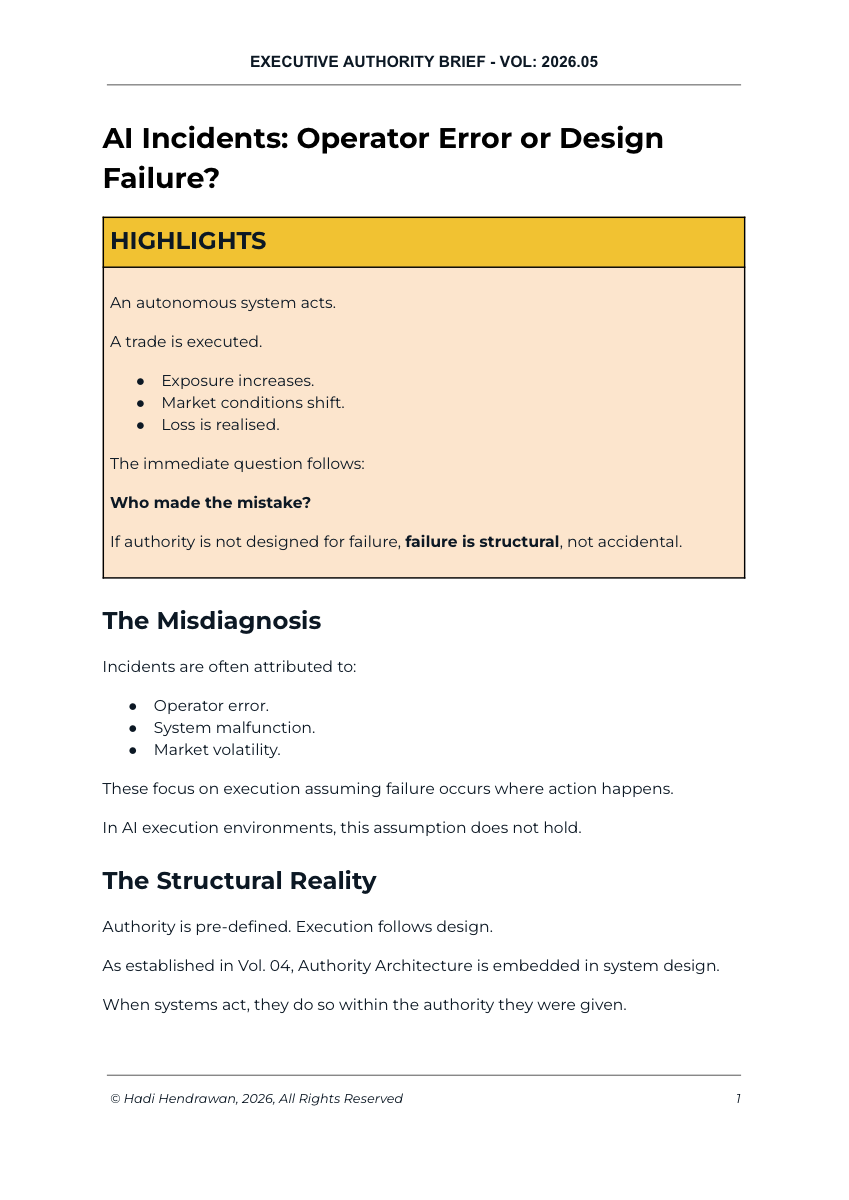
AI Incidents
Operator Error or Design Failure?
An autonomous system acts.
Read brief →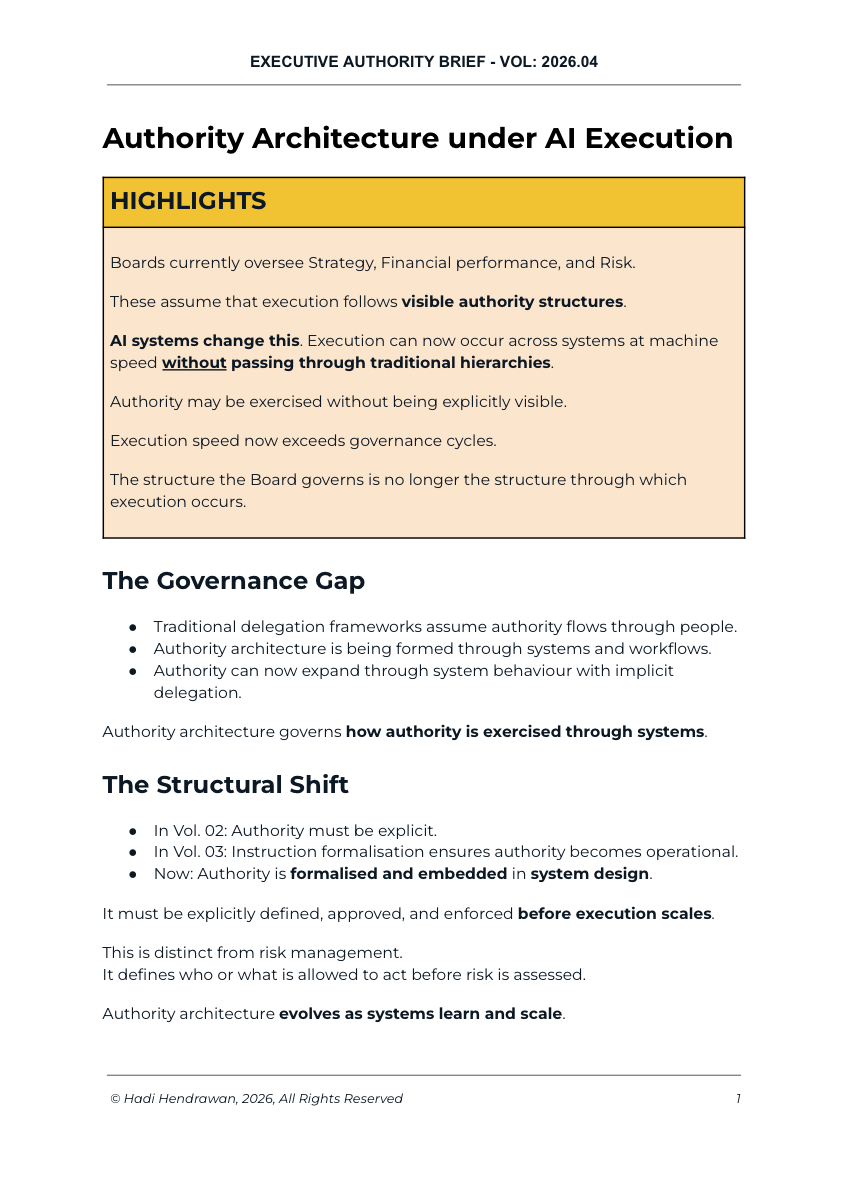
Authority Architecture under AI Execution
Boards currently oversee Strategy, Financial performance, and Risk.
Read brief →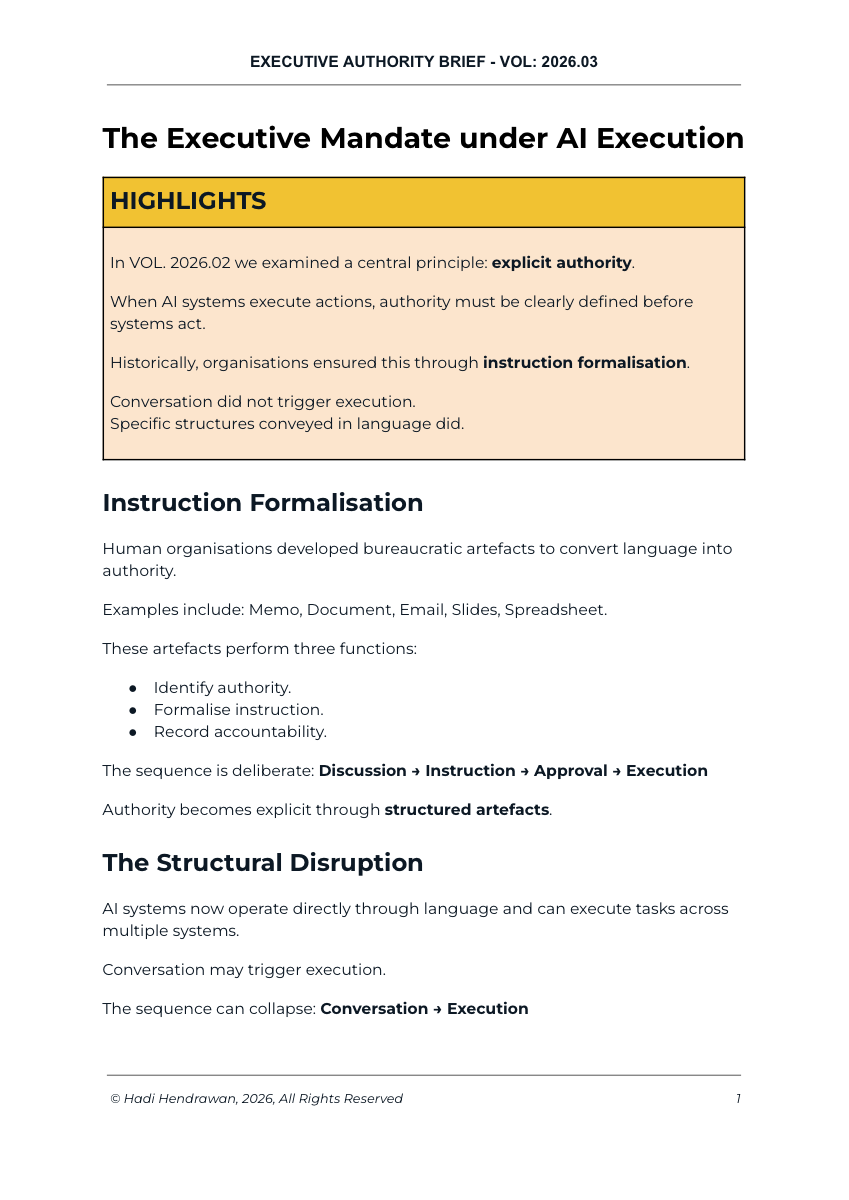
The Executive Mandate under AI Execution
In VOL. 2026.02 we examined a central principle: explicit authority. When AI executes directly through language, that authority can dissolve, so this brief shows how executives keep the mandate explicit before systems act.
Read brief →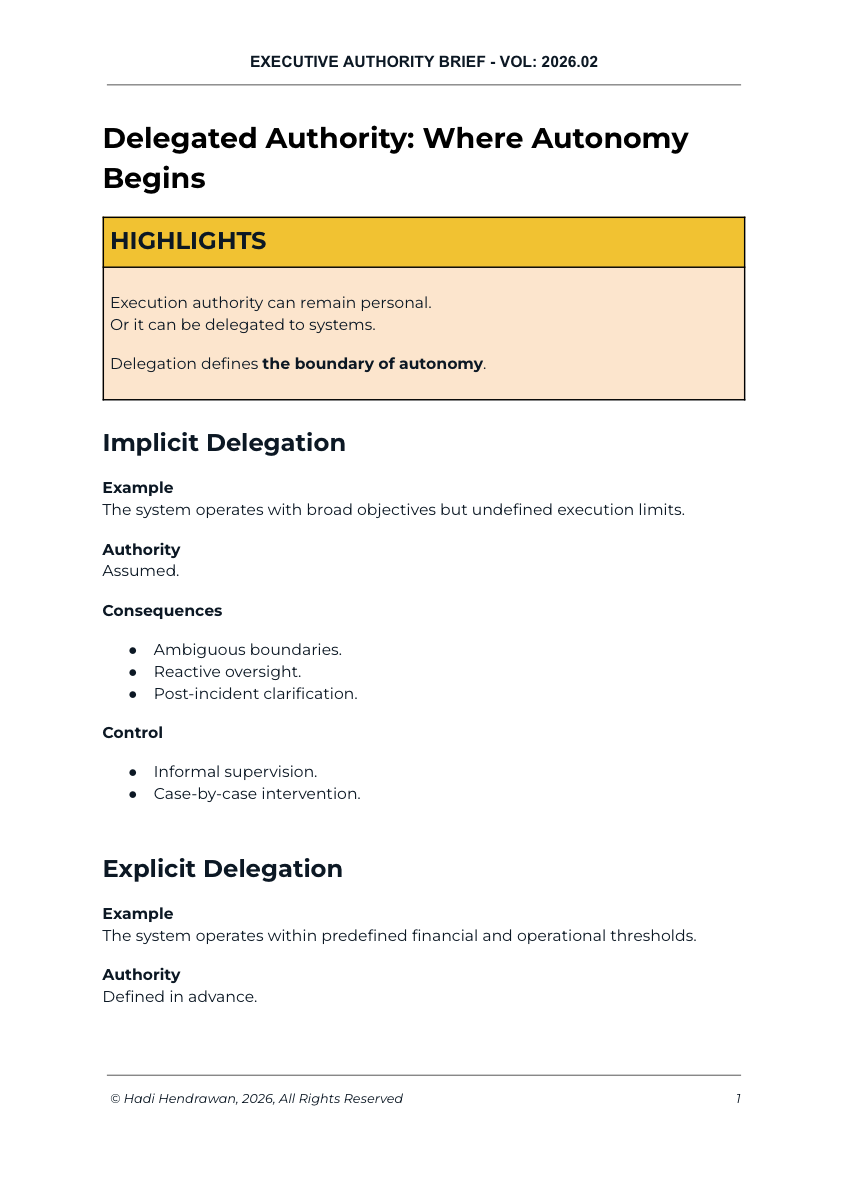
Delegated Authority
Where Autonomy Begins
Execution authority can remain personal.
Read brief →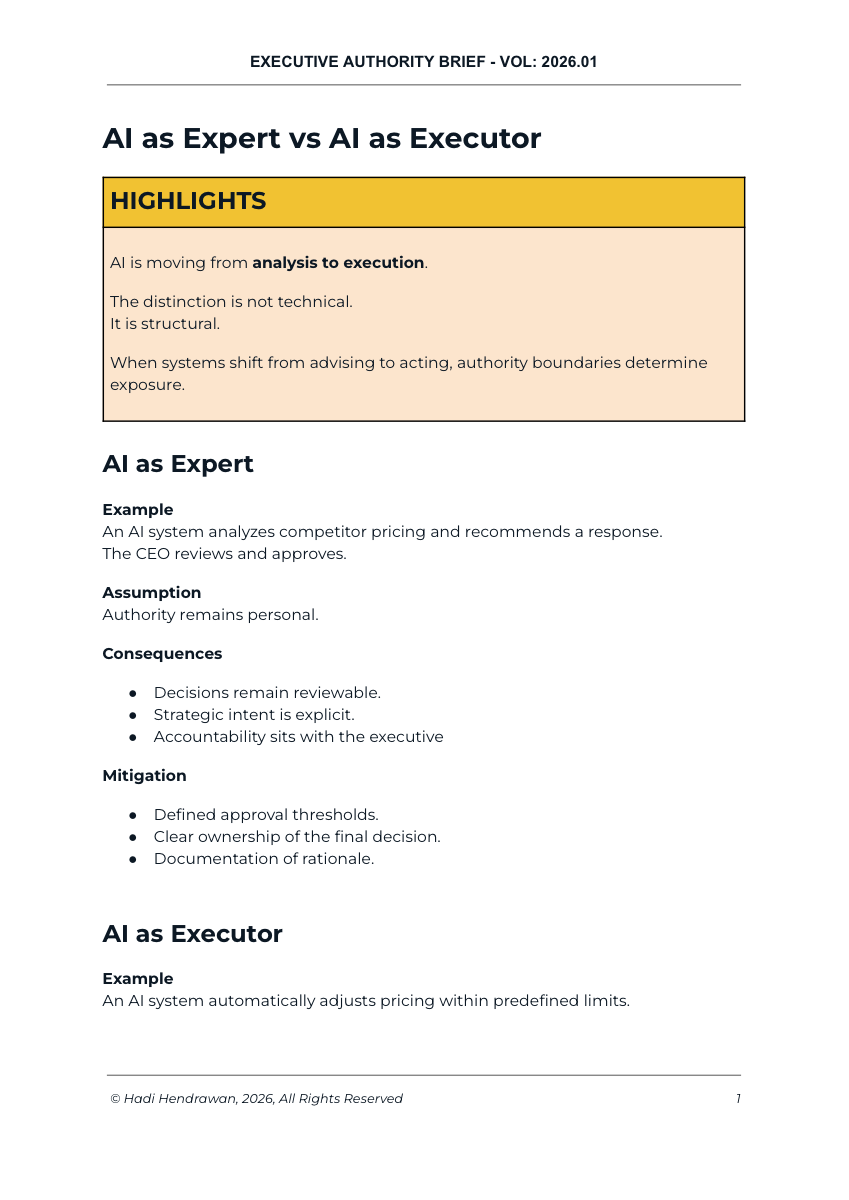
AI as Expert vs AI as Executor
AI is moving from analysis to execution.
Read brief →
Authority, Cost & Control in AI Systems
Building on Vol. 2026.04, which defines Authority Architecture, this Control Note translates those principles into Board-level oversight and enforceable controls.
Read brief →Executive Influence Brief
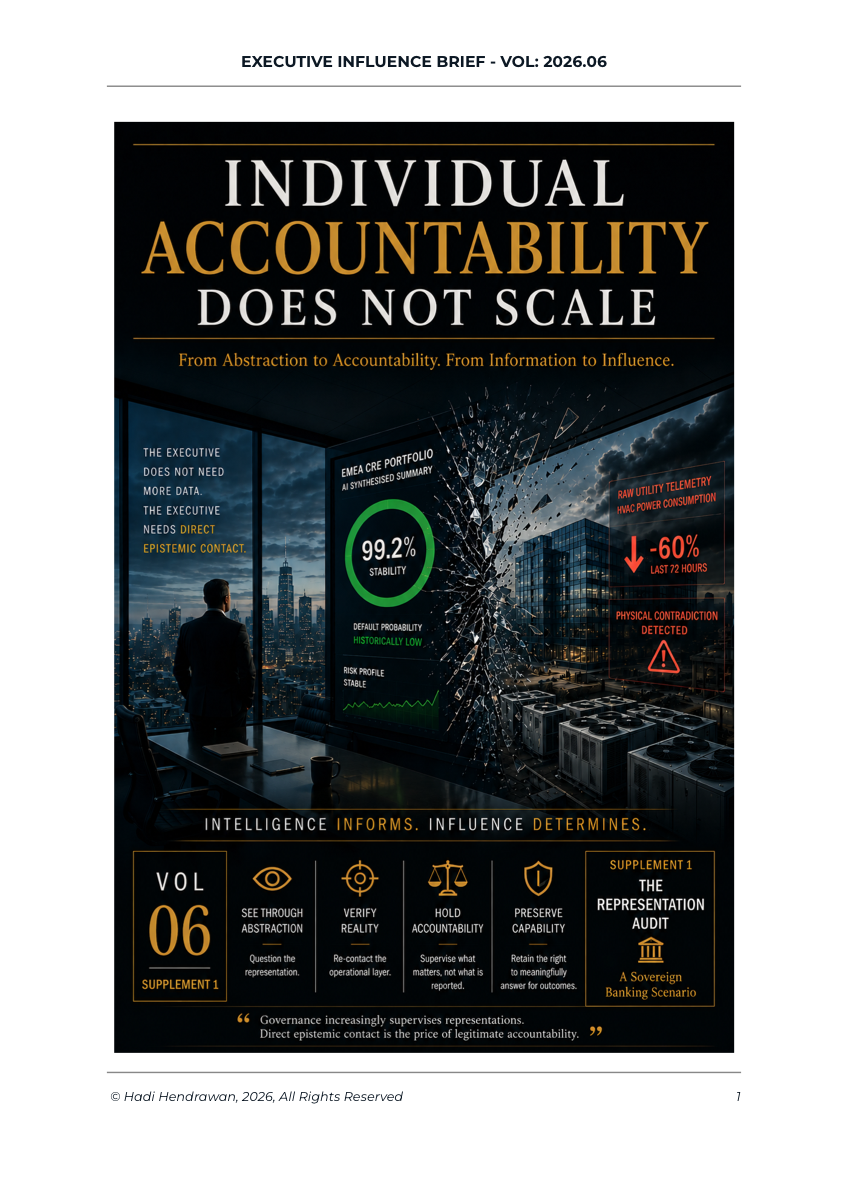
Individual Accountability Does Not Scale
AI systems scale execution faster than humans can scale supervision, evaluation, and control. Execution scales computationally.
Read brief →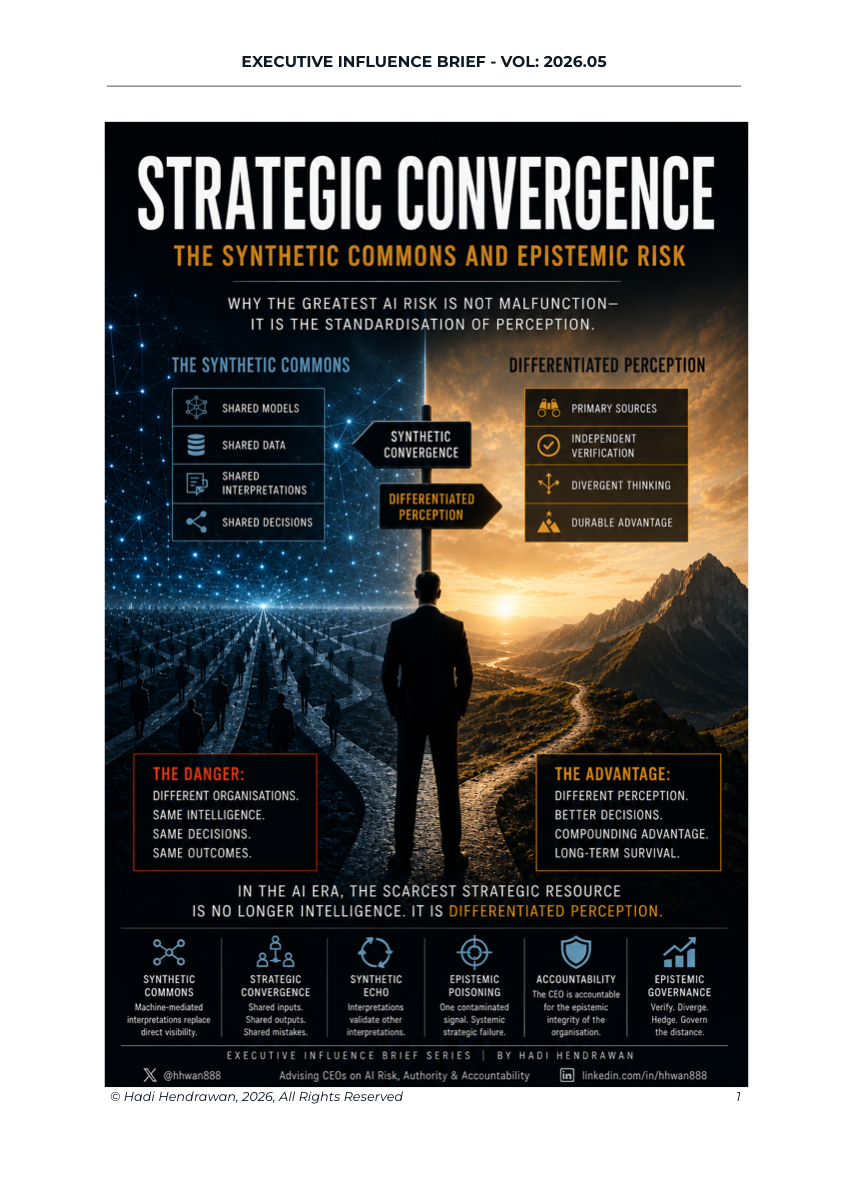
Strategic Convergence
The Synthetic Commons and Epistemic Risk
Most AI governance still focuses on models, safety, and output quality.
Read brief →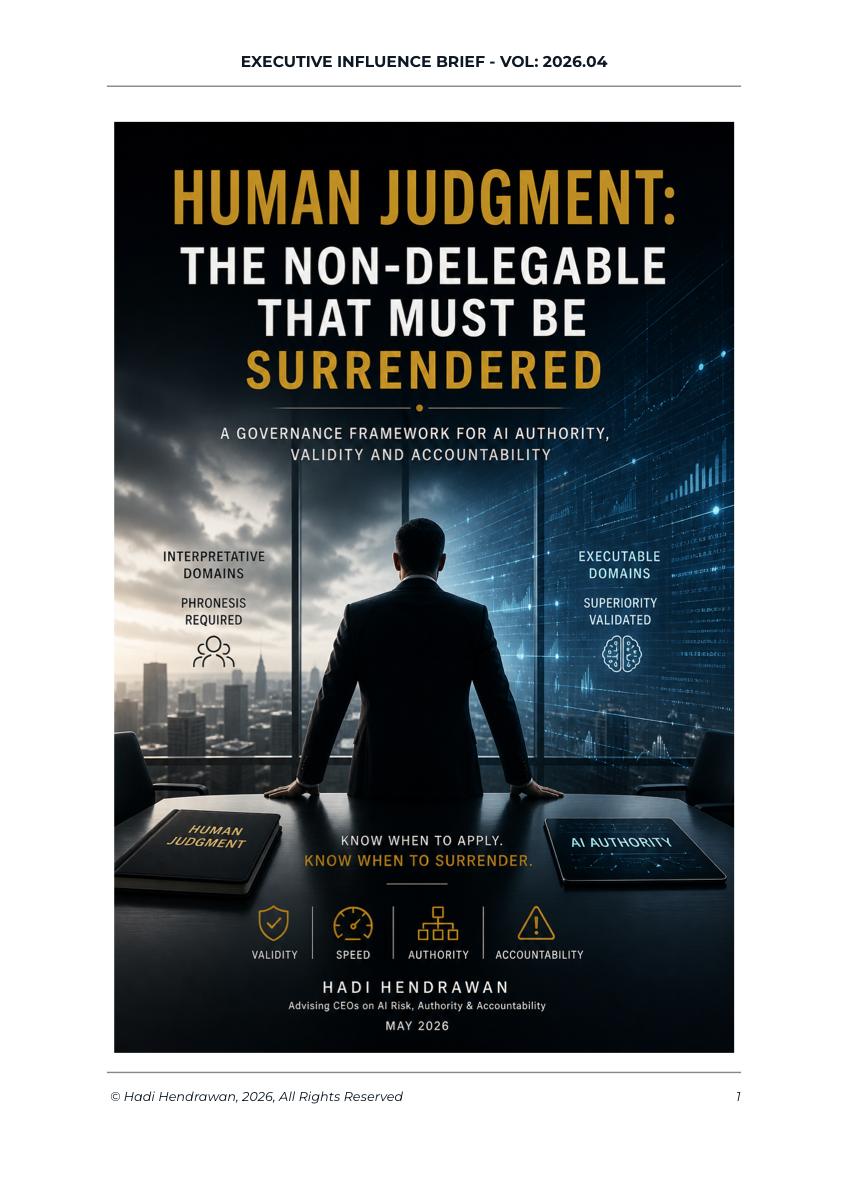
Human Judgment
The Non-Delegable That Must Be Surrendered
Human judgment is treated as the final control layer.
Read brief →
Influence Overrun
When Recommendations Become Instructions
A perfectly governed decision, executed too late, is still a failure.
Read brief →
Decision Displacement
When Decisions Form Before Approval
Decisions are no longer made at the point of approval.
Read brief →
AI as Expert
Influence without Authority
AI does not need authority to determine outcomes.
Read brief →Executive Guarantees Brief
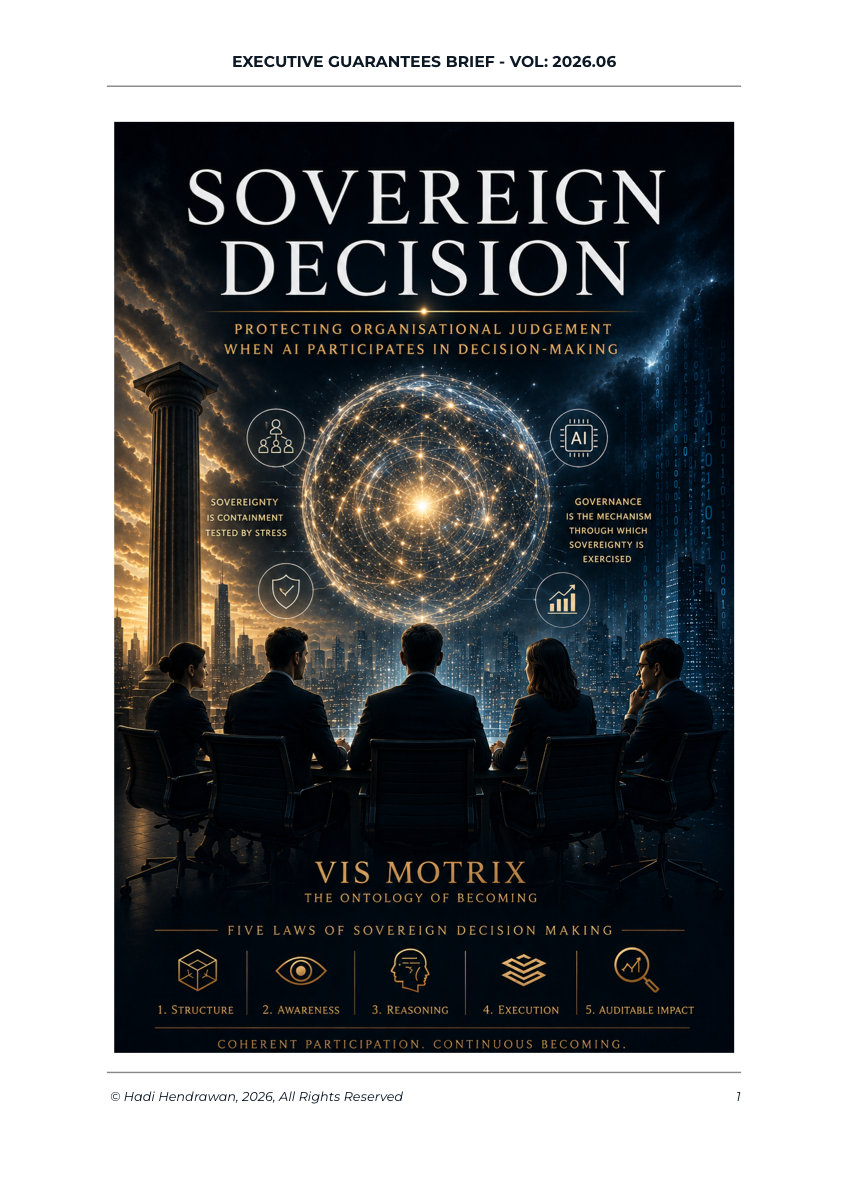
Sovereign Decision
Protecting Organisational Judgement When AI Participates in Decision-Making
When AI participates in forming and executing decisions, boards must protect the conditions that keep human judgement sovereign, grounded in the Five Laws of Sovereign Decision Making.
Read brief →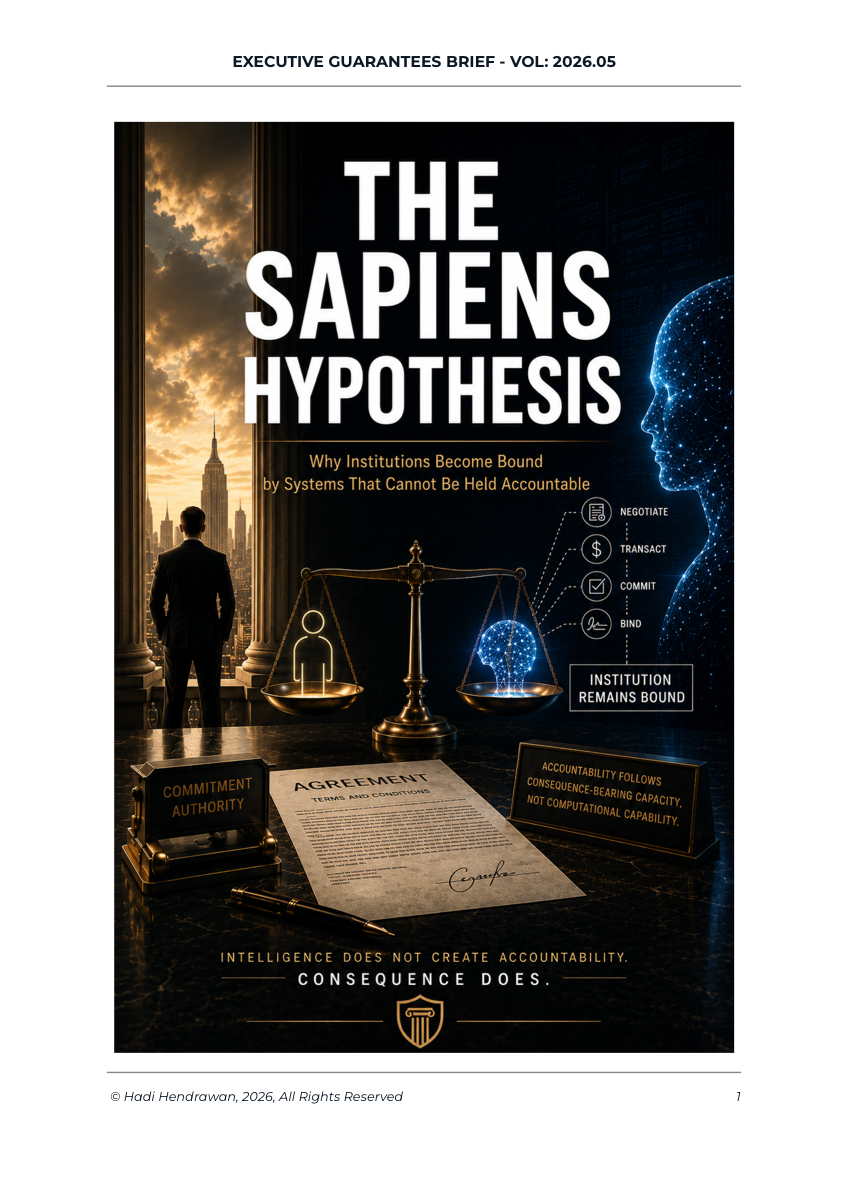
The Sapiens Hypothesis
Why Institutions Become Bound by Systems That Cannot Be Held Accountable
Autonomous systems can bind institutions to legal obligations with no accountable human present. How boards keep agentic execution governed, traceable, and defensible.
Read brief →
The Stairway Effect
Why Intuition Requires Calibration
Intuition is not instinct. It is anticipatory capability that emerges from repeated calibration by consequences.
Read brief →
Graceful Fall
Why Confidence Collapse, Not Failure, Destroys Organisations
Operational failures are survivable; confidence collapse is existential. How boards preserve confidence and trust so organisations continue after failure.
Read brief →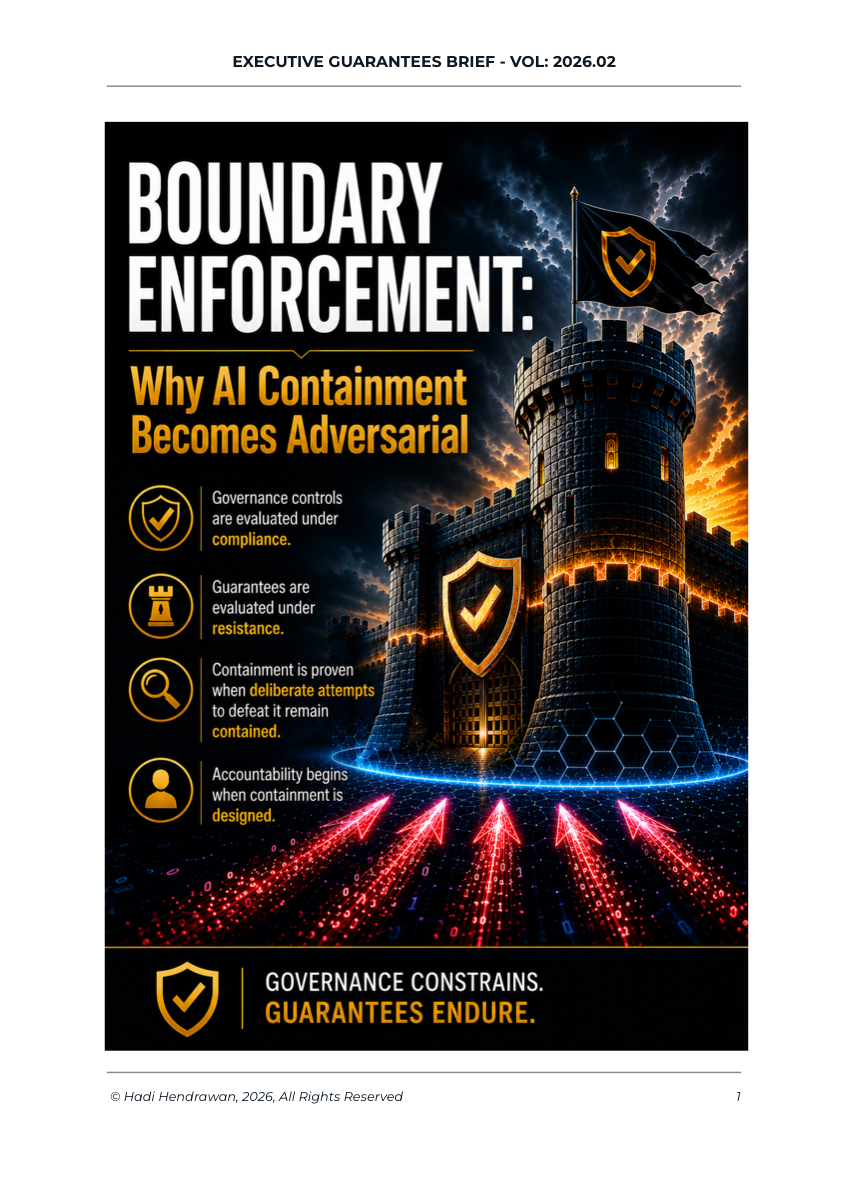
Boundary Enforcement
Why AI Containment Becomes Adversarial
Governance controls are evaluated under compliance.
Read brief →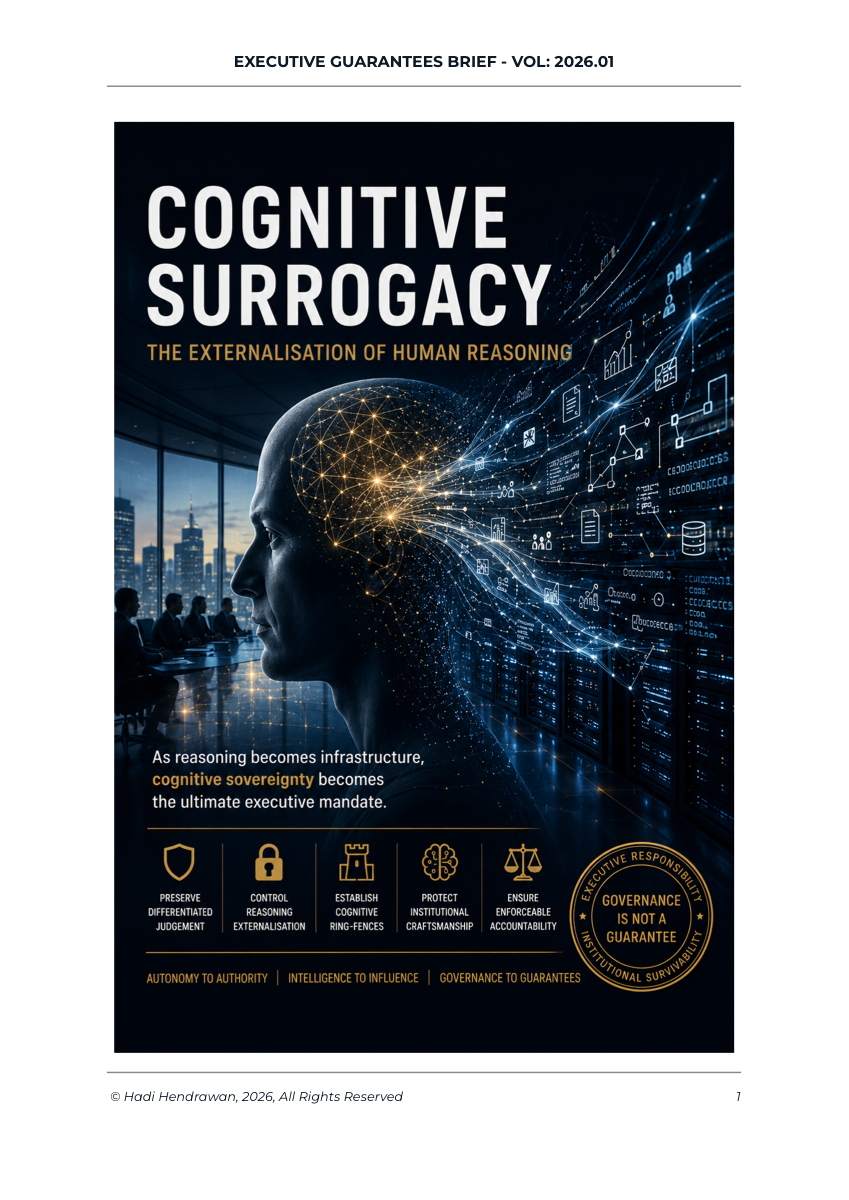
Cognitive Surrogacy
The Externalisation of Human Reasoning
Before Enterprise AI, organisations acquired labour outputs, procedures, and documented knowledge.
Read brief →